Baked Garlic Parmesan Crusted Halibut

- Total30 Mins
- Calories344 kcal
- CuisineAmerican
- Time: 10 min active + 15 min baking + 5 min resting
- Skill level: Easy, requires basic oven use
- Great for: Fast weeknight dinners that feel high-end
Garlic Parmesan Crusted Halibut
There is nothing worse than a soggy crust that slides right off the fish. It usually happens because the fillets were damp or the oven temperature was too low, which steams the breading instead of toasting it.
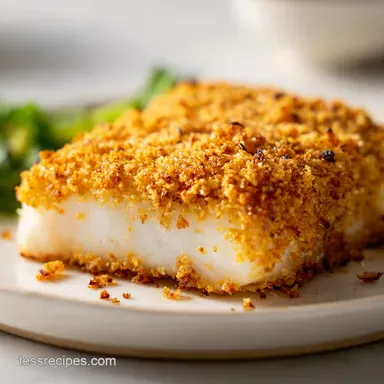
This garlic Parmesan crusted halibut solves that by using a high-heat blast and a "wet sand" topping. You get a crisp, salty layer on top while the fish stays tender and flaky.
It is a fast way to get a rich, hearty meal on the table without spending an hour in the kitchen. Since halibut is a lean fish, the butter in the crust provides the necessary fat to keep the meat juicy.
Why This Method Works
- High Heat: Baking at 425°F toasts the Parmesan and Panko in minutes, so the crust browns before the halibut overcooks.
- Dry Surface: Patting the fillets dry removes the water that usually creates a barrier between the fish and the crust.
| Method | Time | Texture | Best For |
|---|---|---|---|
| Oven Bake | 15 min | Evenly crisp | Busy nights |
| Pan-Sear + Bake | 25 min | Deeply browned | Slow dinners |
The Essential Ingredients
Ingredient Breakdown
| Ingredient | Purpose | Substitutions |
|---|---|---|
| Halibut | Firm, mild foundation | Cod or Mahi Mahi (softer/milder) |
| Panko | Airy, crisp coating | Regular breadcrumbs (heavier result) |
| Parmesan | Salty, nutty accent | Asiago or Pecorino (saltier/sharper) |
| Melted Butter | Richness and binding | Olive oil (milder, still binds) |
The Ingredients
- 4 (6 oz / 170g) halibut fillets
- ½ tsp (3g) salt
- ¼ tsp (1g) black pepper
- 1 tbsp (15ml) olive oil Why this? It handles high heat well
- ½ cup (50g) Panko breadcrumbs
- 1/3 cup (30g) grated Parmesan cheese
- 3 cloves garlic, minced
- 2 tbsp (28g) unsalted butter, melted
- 1 tsp (2g) dried Italian seasoning
- ¼ tsp (1g) paprika
- 1 lemon, cut into wedges
- 1 tbsp (4g) fresh parsley, chopped
Kitchen Tools Needed
You only need a few basics for this. A large baking sheet and parchment paper are mandatory to stop the cheese from sticking to the metal. A small mixing bowl handles the crust, and a spatula works best for moving the fillets.
How to Cook It
Preparing the Base
Preheat the oven to 425°F (220°C) and line a baking sheet with parchment paper. Use paper towels to pat the halibut fillets completely dry on all sides. Season both sides of the fillets with ½ tsp salt and ¼ tsp black pepper. Brush the baking sheet with 1 tbsp olive oil.

Mixing the Crust
In a small mixing bowl, combine ½ cup Panko breadcrumbs, 1/3 cup grated Parmesan, 3 minced garlic cloves, 1 tsp dried Italian seasoning, and ¼ tsp paprika. Pour in 2 tbsp melted unsalted butter. Stir until the mixture resembles wet sand and the crumbs are evenly coated.

Applying the Coating
Place the fillets on the prepared baking sheet. Spoon a generous amount of the butter mixture onto the top of each fillet. Press down firmly with your fingers to create a thick, even layer.
Baking to Perfection
Bake for 12–15 minutes until the crust is golden brown and the fish reaches a safe internal temperature of 145°F (63°C). You can verify this temperature with a digital thermometer to ensure the fish is safe according to USDA food safety guidelines.
Remove from the oven and let the fish rest for 5 minutes. Garnish with 1 tbsp chopped fresh parsley and serve with lemon wedges.

Avoiding Common Pitfalls
If the fish releases too much liquid, the bottom of the fillet can become wet. This is usually caused by overcrowding the pan, which traps steam. Give the fillets space so the air can circulate.
When the fish becomes rubbery, it is a sign of overcooking. Because halibut is lean, it goes from tender to tough very quickly. Use the internal temperature as your primary guide rather than just the clock.
Troubleshooting Fixes
| Problem | Fix |
|---|---|
| Soggy bottom | Pat fillets drier and leave space between them on the pan |
| Rubbery texture | Pull fish at 145°F and let it rest for 5 minutes |
| Crust falls off | Press the mixture firmly into the flesh before baking |
Flavor Twists to Try
For a more vibrant taste, swap the Italian seasoning for 1 tbsp of prepared pesto. This changes the garlic Parmesan crusted halibut into a Mediterranean-style dish. You might need slightly less butter since pesto already contains oil.
If you want a citrus kick, add 1 tsp of lemon zest directly into the Panko mixture. This brightens the heavy flavors of the cheese and garlic. For a hearty meal, this fish pairs well with a broccoli cheddar soup as a side.
You can also swap the Panko for crushed cornflakes for a different type of crunch. Note that cornflakes are sweeter, so add an extra pinch of salt to the crust to balance it.
Storing and Reheating
Store any leftover fish in an airtight container in the fridge. According to USDA guidelines, perishable food should be kept refrigerated and used within 3 to 4 days, but for this specific crusted fish, 2 days is the limit for best quality.
Do not use a microwave to reheat, as it will make the crust soggy and the fish rubbery. Instead, place the fillets in an air fryer or oven at 350°F (175°C) for 5–8 minutes. This allows the Parmesan to crisp up again. Heat leftovers to 165°F (74°C) for safety.
Serving Your Fish

Plate the fillets on a warm dish to keep the crust crisp. Squeeze fresh lemon juice over the top immediately before eating. The acidity cuts through the richness of the butter and cheese.
Pair this with steamed asparagus or a light quinoa salad. If you are serving a crowd, place the fillets on a platter with lemon wedges and parsley sprigs scattered around for a clean, professional look.
Frequently Asked Questions
Can halibut be baked with a garlic parmesan crust?
Bake the fish at 425°F (220°C) for 12-15 minutes to achieve a golden crust. This method ensures the fillets are cooked through while keeping the topping crisp.
Could you explain how to cook the halibut in the oven?
Preheat your oven to 425°F (220°C) and bake the fillets on a parchment-lined sheet. Cook for 12–15 minutes until the internal temperature reaches 145°F (63°C).
Where should I store leftover fish?
Keep leftovers in a sealed container in the refrigerator. Use them within 2 days to maintain the best quality.
Which method is best for reheating the fish?
Use an air fryer or oven at 350°F (175°C) for 5–8 minutes until it reaches 165°F (74°C). This restores the crispness of the Parmesan and prevents the fish from becoming rubbery.
Why is my halibut rubbery?
Overcooking the fish often causes this texture. Pull the fillets out of the oven at 145°F (63°C) and let them rest for 5 minutes.
What stops the crust from falling off?
Press the butter and crumb mixture firmly into the fish fillets before baking. This creates a strong bond between the crust and the meat.
How do I avoid a soggy bottom on my fish?
Pat the fillets completely dry with paper towels and leave space between them on the baking sheet. This stops moisture from accumulating.
Is it possible to pan-sear this halibut instead?
Yes, you can pan-sear the fillets, although the crust may brown more quickly. Be careful with the heat to avoid burning the Parmesan and Panko.
Baked Garlic Parmesan Crusted Halibut
Ingredients:
Instructions:
Keep Cooking

Honey Garlic Shrimp
This 20 Minute Dinner Recipe with Garlic Shrimp features a sticky honey garlic shrimp glaze.

Instant Pot Creamy Garlic Chicken (25 Min)
Use a quick sear and pressure cooking for this Instant Pot Creamy Garlic Chicken.

Salmon Patty Sauce with Lemon
What is the best Salmon Patty Sauce for a zesty kick? Whisk together mayonnaise, sour cream, and…

Broccoli Cheddar Delight Soup
Enjoy this Heart Healthy Broccoli Cheddar Delight Soup Recipe.
