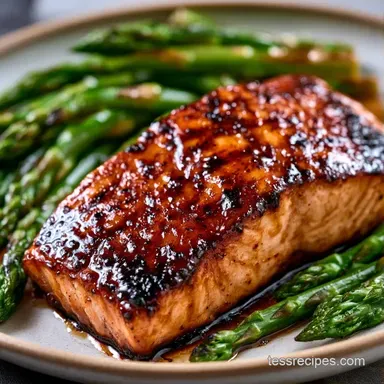
One-Pan Honey Garlic Salmon and Asparagus
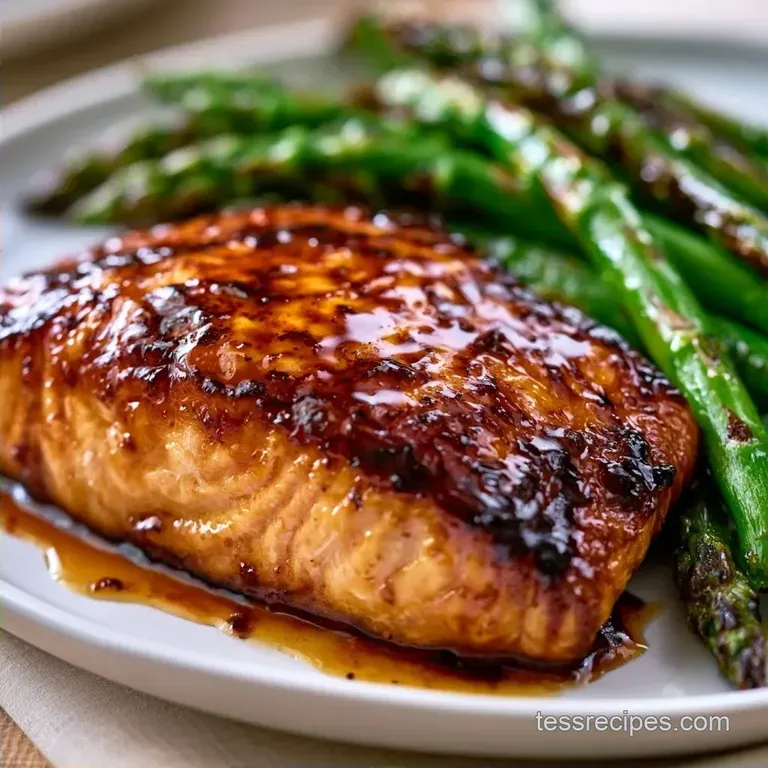
- Time: 5 min active + 12 min cooking
- Flavor/Texture Hook: Mahogany crisp skin with a sticky, glossy glaze
- Perfect for: Tuesday nights after work or a quick date night in
- The Best Quick Busy Night Meal
- Key Techniques for Salmon
- Recipe Specs and Timing
- Ingredient Breakdown and Swaps
- Essential Gear for Searing
- Step-by-Step Cooking Flow
- Troubleshooting Your Salmon Dish
- Variations and Easy Substitutes
- Preservation and Storage Tips
- Best Pairing Ideas
- Recipe FAQs
- 📝 Recipe Card
Ever wonder why some home cooked salmon feels mushy while restaurant fillets have that distinct, audible crackle when you touch them with a fork? I used to struggle with this, often ending up with "steamed" fish that just didn't hit the mark.
The difference usually comes down to how you treat the skin and when you add the sugar.
Once I figured out the timing, this became my go to Quick Busy Night Meal. You get the saltiness of soy, the tang of lemon, and the sweetness of honey all hitting the palate at once. It's a fast way to get a balanced dinner on the table without spending an hour scrubbing pots.
Trust me on this: the prep is minimal, and the result is a rich, hearty meal. If you've had a long day and just want something that tastes like you put in way more effort than you actually did, this is it.
This Quick Busy Night Meal is designed to get you from the fridge to the table in under 20 minutes.
The Best Quick Busy Night Meal
Honey Caramelization: Honey has a low burn point, so we add it at the end. This ensures the sauce thickens into a glaze without turning bitter.
Skin Compression: Pressing the fish down for 10 seconds stops the fillets from curling. This creates more surface area for that crisp, mahogany crust.
One Pan Timing: Asparagus cooks at the same rate salmon finishes. Adding them after the flip means everything hits the plate hot and fresh.
| Goal | Action | Expected Result |
|---|---|---|
| Extra Crispy Skin | Pat bone dry with paper towels | No steam, max sear |
| Thicker Glaze | Spoon sauce over fish repeatedly | Sticky, reduced coating |
| Tender Crisp Veg | Add asparagus in the last 4 mins | Bright green, slight snap |
What Each Ingredient Does
| Ingredient | What It Does | Best Swap |
|---|---|---|
| Honey | Thickens and sweetens | Maple syrup (more earthy) |
| Soy Sauce | Adds salt and umami | Tamari (for gluten-free) |
| Lemon Juice | Cuts through the fat | Lime juice (zestier) |
| Garlic | Provides a pungent base | Garlic powder (less punch) |
Key Techniques for Salmon
The biggest hurdle with salmon is the skin. If you don't get it right, the fish feels slippery. To avoid this, use a stainless steel or cast iron skillet. Non stick is okay, but it doesn't develop the same crust. I always make sure the oil is shimmering before the fish hits the pan.
If the oil isn't hot, the fish sticks and tears.
Then there's the glaze. Most people pour the sauce in too early. Because of the honey, the sauce will burn if it sits on high heat for the full cooking time. By adding it after the flip, the sauce reduces quickly while the fish finishes cooking.
This creates a glossy coating that clings to the protein rather than pooling at the bottom of the pan.
Right then, let's talk about the veg. Asparagus can go from raw to mushy in sixty seconds. By tossing them into the empty spaces of the pan during the final few minutes, they sauté in the leftover fish fats and glaze. It's a fast way to get a side dish without using a second burner.
Recipe Specs and Timing
This meal is built for speed. You aren't spending an hour prepping a marinade or waiting for an oven to preheat. Everything happens in one pan over medium high heat.
- 1. Initial Sear
- 4-5 minutes undisturbed until skin is mahogany.
- 2. The Flip
- Occurs at the 5 minute mark.
- 3. Final Glaze
- 3-4 minutes of bubbling until the sauce is thick.
The total time is exactly 17 minutes. Five minutes to whisk the sauce and prep the fish, and twelve minutes at the stove. It's a reliable timeline for anyone needing a Quick Busy Night Meal.
Ingredient Breakdown and Swaps
I only use a few items here to keep the grocery list short. Stick to these measurements for the best balance of salt and sweet.
- 2 (6 oz / 170g) salmon fillets, skin on Why this? Skin protects the meat from overcooking
- 1 lb (450g) asparagus, woody ends trimmed Why this? Cooks fast and pairs with lemon
- 1 tbsp (14g) olive oil Why this? High smoke point for searing
- 1/2 tsp (3g) kosher salt Why this? Better dissolution than table salt
- 1/4 tsp (1g) black pepper
- 2 tbsp (43g) honey Why this? Creates the sticky glaze
- 1 tbsp (15ml) soy sauce Why this? Deep salt and color
- 1 tbsp (15ml) fresh lemon juice Why this? Brightens the rich fish
- 3 cloves (9g) garlic, minced
| Original Ingredient | Substitute | Why It Works |
|---|---|---|
| Honey (2 tbsp) | Maple Syrup (2 tbsp) | Similar viscosity. Note: Tastes more like autumn |
| Soy Sauce (1 tbsp) | Coconut Aminos (1 tbsp) | Lower sodium. Note: Slightly sweeter, less salty |
| Asparagus (1 lb) | Broccolini (1 lb) | Similar cook time. Note: May need 1 extra minute |
If you're in the mood for something different, maybe try a fresh basil pasta for a lighter night. But for a hearty protein hit, this salmon is the way to go.
Essential Gear for Searing
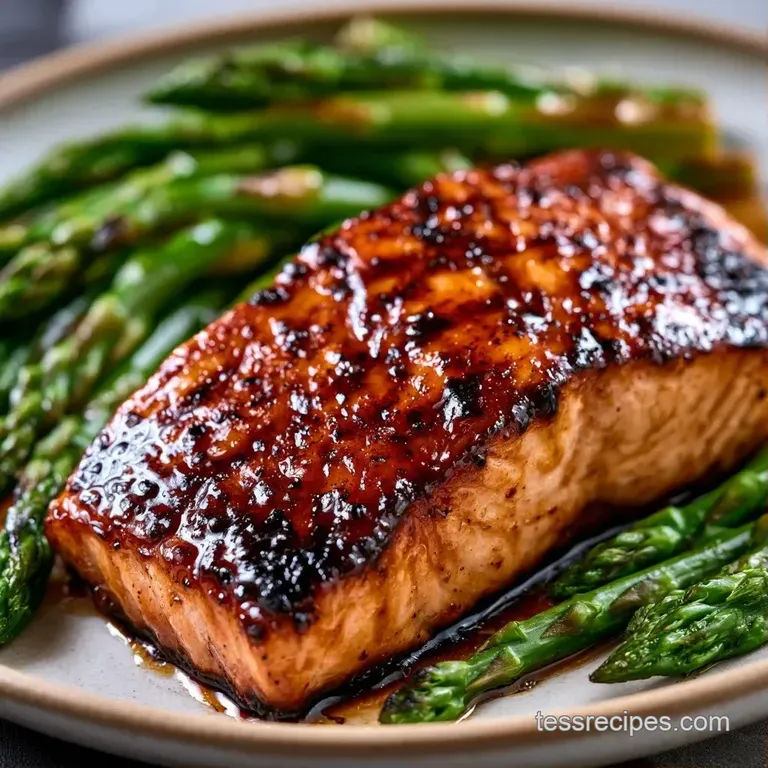
You don't need a professional kitchen for this, but a few tools make it easier. A 12 inch skillet is the gold standard here. If the pan is too small, the salmon fillets will crowd each other, and you'll end up steaming the fish instead of searing it.
I prefer a cast iron pan because it holds heat so well. When you add the cold salmon and asparagus, the pan temperature doesn't drop as much, which keeps the sear going. If you only have non stick, just be careful not to overheat the pan to the point where the coating degrades.
A flexible spatula is also a must. You need something that can get under the skin without ripping it. A thin metal fish spatula is the best tool for the job, but any flat turner works.
Step-by-step Cooking Flow
Follow these steps exactly to keep the timing tight.
- Pat the salmon fillets completely dry with paper towels. Note: Moisture on the skin prevents searing
- Season both sides of the fish with salt and pepper.
- Whisk honey, soy sauce, lemon juice, and minced garlic in a small bowl until smooth.
- Heat olive oil in a 12 inch skillet over medium high heat until it shimmers.
- Place salmon skin side down. Press firmly with a spatula for 10 seconds.
- Sear undisturbed for 4-5 minutes until skin is mahogany colored and crisp.
- Flip the fillets over.
- Add the trimmed asparagus to the empty spaces of the pan.
- Pour the glaze over the salmon and asparagus.
- Cook for 3-4 minutes until the sauce bubbles and thickens, spooning it over the fish.
Troubleshooting Your Salmon Dish
If your salmon comes out too dry, it's usually because the heat was too high during the second side of the cook. Since the skin side takes most of the time, the flip side only needs a few minutes.
| Issue | Solution |
|---|---|
| Why Your Salmon Skin Sticks | The pan wasn't hot enough, or the fish was too wet. If the skin sticks, don't force it. Wait another 30 seconds; usually, the fish will "release" itself from the pan once the sear is fully formed. |
| Why Your Glaze Burnt | Honey burns quickly. If the sauce turns black or tastes bitter, you likely added it too early or the heat was on "high" instead of "medium high." |
| Why Your Asparagus is Mushy | You probably added the veg too early. They only need a few minutes in the pan. If you're using very thin asparagus, add them in the last 2 minutes instead of 4. |
Variations and Easy Substitutes
This Quick Busy Night Meal is very flexible. If you don't have salmon, shrimp works great. Just be aware that shrimp cooks much faster, so you'll only sear them for 2 minutes per side and add the glaze at the very end.
For the greens, broccoli florets are a great swap for asparagus. Since broccoli is denser, I recommend blanching it for 60 seconds in boiling water first, or adding it to the pan 2 minutes before the salmon.
If you want a spicy version, add a teaspoon of Sriracha or red pepper flakes to the glaze. It adds a nice heat that balances the honey. For a more "comfort food" feel, you could serve this over a bed of jasmine rice. On other nights, I might go for a homemade comfort food dinner, but the salmon is better when you're short on time.
Decision Shortcut:
- If you want more heat → add red pepper flakes to the glaze.
- If you want a nuttier taste → swap honey for maple syrup.
- If you're using frozen salmon → thaw completely in the fridge first.
Preservation and Storage Tips
Salmon is best eaten fresh, but leftovers are still great. Store the fish and asparagus in an airtight container in the fridge for up to 2 days.
To reheat, avoid the microwave if you want to keep any of that skin crispness. I recommend popping them in a 350°F (180°C) oven for about 5-7 minutes. This warms the fish through without drying it out.
For zero waste, don't toss the lemon wedges or the ends of the asparagus. I put my asparagus woody ends in a freezer bag for making veggie stock. If you have leftover glaze in the pan, pour it over some steamed rice or quinoa for a quick lunch the next day.
Best Pairing Ideas
Since this Quick Busy Night Meal is rich and sweet, you want sides that bring some acidity or freshness to the plate. A simple arugula salad with a lemon vinaigrette is the most reliable pairing. The peppery greens cut right through the honey glaze.
Quinoa or farro also work well to soak up the extra sauce. If you want something heartier, roasted baby potatoes are a win, though they take longer to cook than the salmon.
If you're serving this to guests, a cold glass of crisp white wine like Sauvignon Blanc complements the lemon and soy. It keeps the whole meal feeling light and fresh. This recipe really proves that a Quick Busy Night Meal doesn't have to be boring or unhealthy.
Just a few minutes of focus on the sear, and you've got a dinner that tastes like a luxury.
Recipe FAQs
How to stop salmon skin from sticking?
Pat the fillets completely dry with paper towels. Moisture on the skin prevents a proper sear, which is what allows the fish to release naturally from the pan.
Is it true that salmon must be cooked on both sides for the same amount of time?
No, this is a common misconception. The skin side requires 4-5 minutes to achieve a mahogany crust, while the flip side only needs 3-4 minutes to avoid overcooking the fish.
What pantry staples are needed for this quick meal?
Keep honey, soy sauce, and olive oil on hand. These basics, combined with lemon and garlic, create the glaze and sear needed for this 17-minute dinner.
How to adapt this recipe if I only have shrimp?
Sear the shrimp for 2 minutes per side. Because shrimp cook significantly faster than salmon, add the honey-soy glaze at the very end of the process.
Can I use broccoli instead of asparagus?
Yes, broccoli is a great swap. Blanch the florets in boiling water for 60 seconds first, or add them to the pan 2 minutes before the salmon is finished.
Why did my glaze burn in the pan?
The honey in the sauce scorched from excessive heat. If the glaze turns black, reduce the heat and spoon the bubbling sauce over the fish more frequently.
What is the fastest way to prep this meal?
Whisk the glaze ingredients while the skillet heats up. If you enjoyed this efficiency, see how similar speed-focused methods work in our ground beef rice skillet.
Honey Garlic Salmon in 17 Minutes