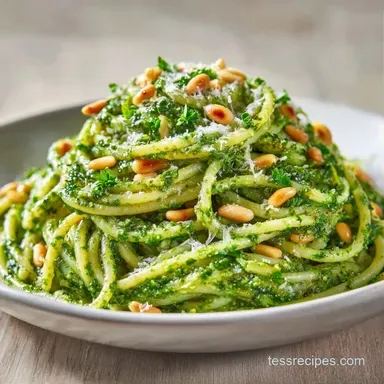
Easy Pesto Basil Dinner: Silky and Bright

- Time: 5 min active + 10 min cook
- Flavor/Texture Hook: Velvety, herbaceous, and rich
- Perfect for: Busy weeknights or a quick vegetarian feast
- Simple Guide to Easy Pesto Basil Dinner
- The Logic Behind the Flavor
- Pesto Component Analysis
- The Pesto Grocery List
- Step by Step Assembly
- Solving Pesto Problems
- Troubleshooting Common Issues
- Creative Flavor Twists
- Storage and Waste Tips
- Best Side Dish Pairs
- Pesto Truths
- High in Sodium
- Recipe FAQs
- 📝 Recipe Card
Simple Guide to Easy Pesto Basil Dinner
The smell of fresh basil hitting a blade is something else. It's a sharp, peppery scent that immediately takes me back to the coast of Liguria. In Italy, specifically around Genoa, pesto isn't just a condiment, it's a cultural identity.
They've spent centuries arguing over the exact type of basil or the best way to grind the nuts, but at its heart, it's about capturing the essence of summer in a bowl.
For me, the first time I tried making this at home, I over processed the basil until it turned a weird, muddy brown. I thought I'd ruined it, but I realized the heat from the processor blades was actually cooking the leaves. Once I figured out the "pulse and chill" method, everything changed.
This Easy Pesto Basil Dinner is my go to because it doesn't require a fancy kitchen. You just need a few fresh ingredients and about 15 minutes of your life. It's the kind of meal that feels like you spent hours in the kitchen, but in reality, you're just utilizing a few smart shortcuts to get a rich, hearty result.
The Logic Behind the Flavor
Starch Bond: Using the cloudy pasta water creates a bridge between the oil based pesto and the pasta. The starch acts as a stabilizer, turning a loose sauce into a velvety coating.
Cold Processing: By pulsing the ingredients in short bursts, we avoid overheating the basil. High heat oxidizes the chlorophyll, which is why some store-bought pestos look like olive drab instead of bright green.
Fat Acid Balance: The lemon juice cuts through the heavy fats of the pine nuts and olive oil. This prevents the dish from feeling too "heavy" on the palate and makes the basil flavor pop.
Umami Depth: The Parmesan cheese provides a salty, fermented backbone. It rounds out the sharp garlic and fresh herbs, giving the sauce a savory weight.
| Method | Prep Time | Texture | Best For |
|---|---|---|---|
| Fast (Processor) | 5 minutes | Smooth/Velvety | Weeknight meals |
| Classic (Mortar) | 20 minutes | Chunky/Rustic | Slow Sundays |
This distinction is important. While the traditional way is lovely, the food processor is the real winner for an Easy Pesto Basil Dinner when you're starving after a long day at work. If you find yourself craving something even more comforting, you might like my homemade comfort food dinner which takes a bit more time but hits that same spot.
Pesto Component Analysis
| Ingredient | Science Role | Pro Secret |
|---|---|---|
| Fresh Basil | Primary Flavor/Color | Pat leaves completely dry to prevent watery sauce |
| Pine Nuts | Creaminess/Fat | Toast them for 3 mins to unlock oils |
| Parmesan | Salt/Binding | Grate it yourself; pre shredded has anti clumping starch |
| Olive Oil | Emulsifier/Carrier | Use a fruity extra virgin for a peppery finish |
The Pesto Grocery List
- 2 cups (50g) fresh basil leaves, packed and dried Why this? Provides the core herbaceous flavor
- 1/3 cup (45g) pine nuts, lightly toasted Why this? Adds a buttery, nutty richness
- 1/2 cup (50g) Parmesan cheese, freshly grated Why this? Essential for salty umami
- 2 cloves (6g) garlic, peeled Why this? Adds a sharp, aromatic punch
- 1/2 cup (120ml) extra virgin olive oil Why this? The base that carries all flavors
- 1 tbsp (15ml) fresh lemon juice Why this? Keeps the color bright and adds acidity
- 1/2 tsp (3g) sea salt Why this? Enhances all other flavors
- 1/4 tsp (1g) black pepper Why this? Adds a subtle heat
- 1 lb (450g) pasta Why this? The hearty base for the sauce
- 1/2 cup (120ml) reserved pasta cooking water Why this? Binds the sauce to the noodle
| Original Ingredient | Substitute | Why It Works |
|---|---|---|
| Pine Nuts | Walnuts | Earthier flavor. Note: Slightly more bitter than pine nuts |
| Parmesan | Pecorino Romano | Saltier, sheep's milk tang. Note: More aggressive flavor profile |
| Fresh Basil | Baby Spinach | Similar color. Note: Lacks the peppery basil punch |
| Olive Oil | Avocado Oil | Neutral flavor. Note: Loses the distinct olive fruitiness |
Honestly, don't even bother with low-fat cheese here. You need the fat for the texture to work. If you're looking for a lighter start to your meal, maybe try a garlic hummus as an appetizer before diving into the pasta.
Step by step Assembly
The Pulse Phase
- Place the toasted pine nuts and garlic in the food processor. Pulse 3-5 times until coarsely chopped. Note: Don't turn it into a paste yet
- Add the fresh basil and salt to the processor. Pulse in short bursts until the leaves are broken down but not pureed.
The Emulsion Phase
- While the processor is running on low, slowly drizzle in the olive oil and lemon juice. Process until the sauce is velvety.
- Fold in the grated Parmesan by hand or with one final quick pulse to maintain texture. Note: Hand folding keeps the cheese from disappearing into the oil
The Pasta Marriage
- Boil the pasta in salted water until al dente. Reserve 1/2 cup of the cloudy pasta water before draining.
- Return the drained pasta to the pot over very low heat. Pour in the pesto and reserved pasta water, tossing constantly until a glossy coating forms.
Chef's Note: Never boil your pesto. The high heat kills the fresh basil flavor and makes the cheese clump. Always toss it with the pasta off the main heat source.
Solving Pesto Problems

Troubleshooting Common Issues
| Issue | Solution |
|---|---|
| Why Your Pesto Tastes Bitter | This usually happens because the garlic was over processed or the basil was bruised too harshly. If you blend the garlic into a microscopic paste, it releases a harsh, sulfurous bite. |
| Why Your Sauce Separates | If you see oil pooling at the bottom of the bowl, your emulsion broke. This happens if the oil was added too quickly or if the sauce was heated too fast. |
| Why Your Basil Turned Brown | Oxidation is the enemy. If the basil sits too long after being cut, or if the processor blades get too hot, the green fades. Adding the lemon juice immediately helps shield the color. |
Common Mistakes Checklist
- ✓ Did you toast the pine nuts? (Raw nuts lack the depth needed)
- ✓ Is the pasta water reserved? (Without it, the sauce is too oily)
- ✓ Did you grate the cheese fresh? (Pre shredded won't melt smoothly)
- ✓ Is the heat off or very low? (Boiling pesto is a disaster)
- ✓ Are the basil leaves dry? (Water on leaves prevents oil from sticking)
Creative Flavor Twists
If you want to lean into a Vegetarian Pesto Basil Dinner, try adding sun dried tomatoes to the final toss. The tart sweetness of the tomatoes balances the rich pine nuts perfectly.
For a Healthy Pesto Basil Dinner, you can swap the pasta for zoodles or roasted spaghetti squash, though you'll want to increase the amount of Parmesan to make up for the lack of starch.
Decision Shortcut:
- If you want a creamy vibe → add 1 tbsp of Greek yogurt or ricotta at the end.
- If you want a spicy kick → add a pinch of red pepper flakes to the oil.
- If you want a nut free version → use toasted sunflower seeds instead of pine nuts.
For those who prefer a slower pace, you can check out a slow cooked comfort dinner for a completely different mood, but for a fast Easy Pesto Basil Dinner, stick to the processor.
Storage and Waste Tips
Pesto is a bit temperamental in the fridge because the oil can solidify and the basil can oxidize. Store it in a glass jar, but here is the real trick: pour a thin layer of olive oil over the top of the pesto before sealing the lid. This creates an air barrier that keeps the green color vibrant for about 5 days.
In the freezer, pesto lasts for 3 months. To make it easy to use, freeze it in ice cube trays to keep that summer flavor in your kitchen all year long. Just pop one cube into a pan with some pasta water whenever you need a quick sauce.
For zero waste, don't toss the basil stems. They actually have a lot of flavor. You can throw them into a simmering pot of vegetable stock or blend them into the pesto, just pulse them at the very beginning with the garlic to make sure they get fully broken down.
Best Side Dish Pairs
This Easy Pesto Basil Dinner is rich, so you want sides that provide a crisp contrast. A simple arugula salad with a lemon vinaigrette works well because the bitterness of the greens cuts through the pine nut fat.
If you're hosting, a side of mozzarella bruschetta is the gold standard. The toasted bread and fresh tomato provide a textural counterpoint to the velvety pasta.
Another great option is roasted asparagus or charred broccolini. The smokiness from the oven complements the freshness of the basil without competing for attention. Just keep the sides light; the pesto is the star of the show here.
Pesto Truths
Many people think you need to "cook" the pesto to make it safe or tasty. This is a total myth. Pesto is a raw sauce. Cooking it destroys the delicate aromatic oils in the basil and turns your bright green dinner into a dull brown mess. The only heat it should ever encounter is the residual heat from the pasta.
Another common misconception is that you must use pine nuts. While they are traditional, any high fat nut works. Almonds or cashews can produce a similar creaminess, though the flavor profile shifts toward something more neutral. Trust your taste buds over the "rules."
High in Sodium
840 mg 840 mg of sodium per serving (37% 37% of daily value)
The American Heart Association recommends a daily limit of no more than 2,300 mg of sodium to help manage blood pressure and heart health.
Tips to Reduce Sodium
-
Reduce Added Salt-25%
Eliminate or halve the 1/2 tsp of sea salt. The Parmesan cheese already provides a significant salty punch.
-
Modify the Cheese-15%
Replace half of the Parmesan with nutritional yeast or a low-sodium hard cheese to maintain the savory flavor with less salt.
-
Unsalted Pasta Water-10%
Boil your pasta in unsalted water; this ensures the reserved pasta water used for the sauce doesn't add hidden sodium.
-
Increase Acidity-5%
Add an extra teaspoon of fresh lemon juice to brighten the flavors, which tricks the palate into needing less salt.
-
Boost Fresh Aromatics
Incorporate additional fresh basil or a pinch of red pepper flakes to enhance the complexity of the pesto without adding sodium.
Recipe FAQs
Is this easy pesto basil dinner vegetarian?
Yes. This recipe uses fresh basil, toasted pine nuts, and Parmesan cheese, making it fully vegetarian-friendly.
Is an easy pesto basil dinner healthy?
Yes. It features heart-healthy monounsaturated fats from extra virgin olive oil and pine nuts, along with nutrient-dense fresh basil.
Can I make this pesto recipe without pine nuts?
No, pine nuts are essential for the creamy texture of this sauce. If you prefer a different flavor profile for a quick dinner, try our garlic shrimp.
How to make a basil pesto pasta recipe?
Boil pasta in salted water until al dente. Reserve 1/2 cup of the cloudy pasta water, then toss the drained pasta with pesto over very low heat until a glossy coating forms.
How to make a basil pesto recipe?
Pulse toasted pine nuts and garlic in a food processor. Add basil and salt, slowly drizzle in olive oil and lemon juice while processing on low, and fold in grated Parmesan.
How to make an easy pesto recipe?
Use a food processor to blend all ingredients in under 5 minutes. This method ensures a velvety emulsion and eliminates the need for tedious hand-chopping.
Is it true that I must puree the basil completely for a smooth sauce?
No, this is a common misconception. Pulse in short bursts to break down the leaves without pureeing them, which prevents the basil from bruising and tasting bitter.
Easy Pesto Basil Dinner in 15 Minutes